
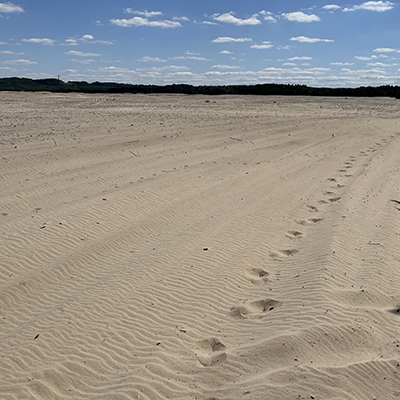
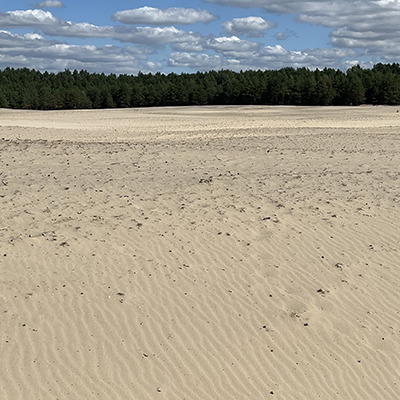
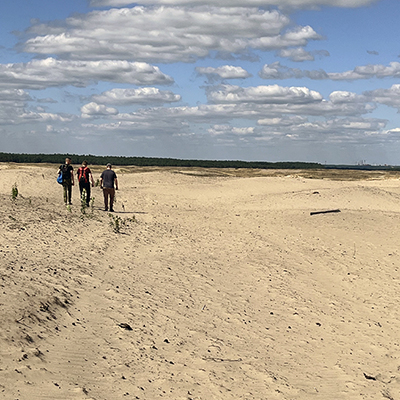
The Błędów Desert (Pustynia Błędowska), the largest expanse of shifting sands in Central Europe, is located approximately 50 km from Kraków. Covering about 33 km², it offers a unique environment for studying desert landscapes and aeolian processes, i.e., erosion, transportation, and deposition of loose sediments by the wind.
The desert developed on extensive sand deposits left by retreating glaciers thousands of years ago. From the Middle Ages, intensive mining and metallurgical activities in the region led to widespread deforestation. The resulting loss of vegetation exposed loose sands, enabling wind-driven processes to reshape the landscape and form extensive areas of migrating sand. Today, the Błędów Desert features a variety of aeolian landforms, including ripples and dunes. The site also preserves subfossil cattle and human footprints within the sand deposits.
As a well-documented example of human-induced environmental transformation, the Błędów Desert provides valuable opportunities for research and education. Owing to its desert-like conditions, it is also regarded as a planetary analog site suitable for testing equipment and methodologies intended for use in desert environments on other planetary bodies.
The field trip includes walking on sandy and uneven terrain. For comfort and safety, please wear comfortable, sturdy footwear suitable for sandy conditions. We also recommend:
- comfortable outdoor clothing appropriate for the weather
- a hat, sunglasses, and sunscreen, particularly on sunny days
- a light rain jacket in case of changing weather
- sufficient drinking water
 |
 |
 |